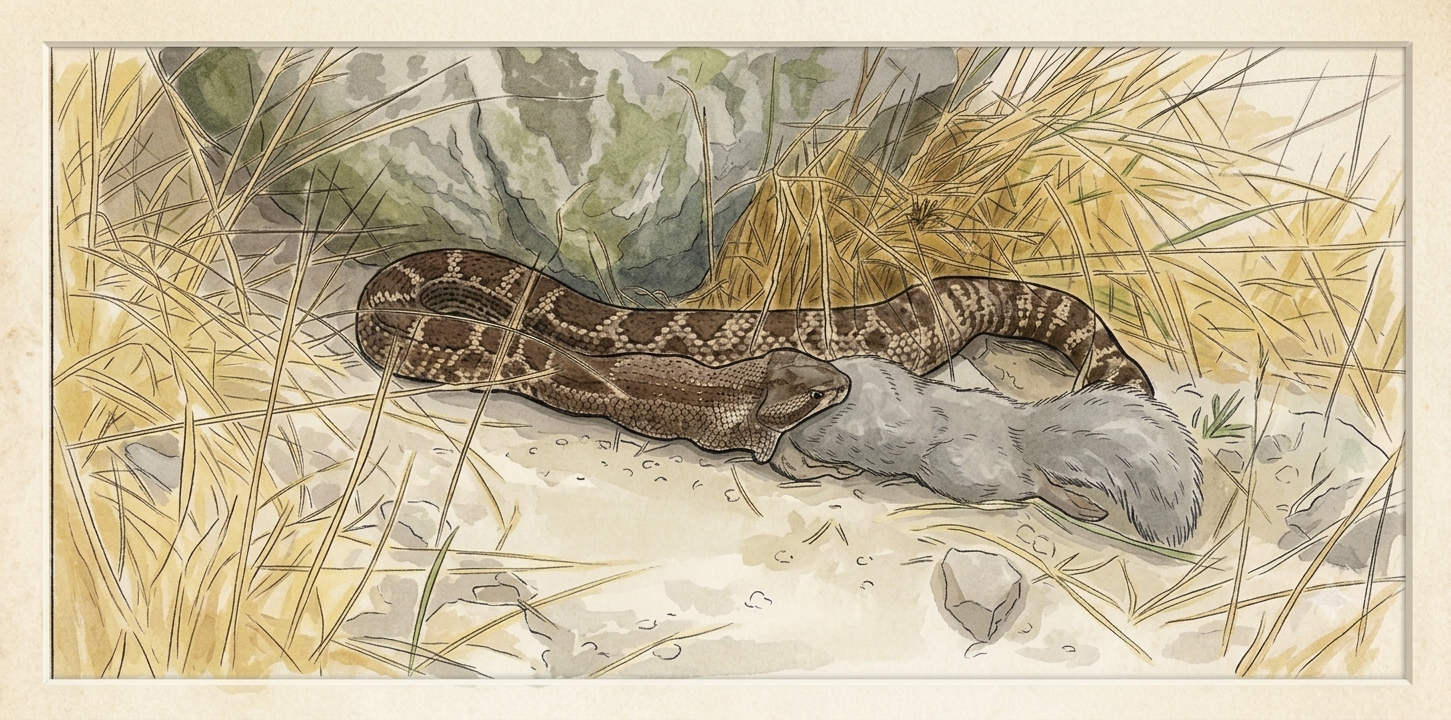
How does coevolution shape species, their traits, and their genomes? – Coevolution is a powerful, relentless force for evolutionary change. I am interested in how species manage to keep up with their coevolving enemies from a genomic point of view. Adaptation originates from difference in gene sequences, differences in the expression of genes, or changes in the number of a particular gene a species has (called copy number variation). I have worked to understand the relative role of each class of genomic variation at different timepoints to understand biases in the path to evolutionary divergence. I have studied how dietary diversity drives the evolution of venom complexity in rattlesnakes and the copy number of plant detoxification genes in the livers of rodents.
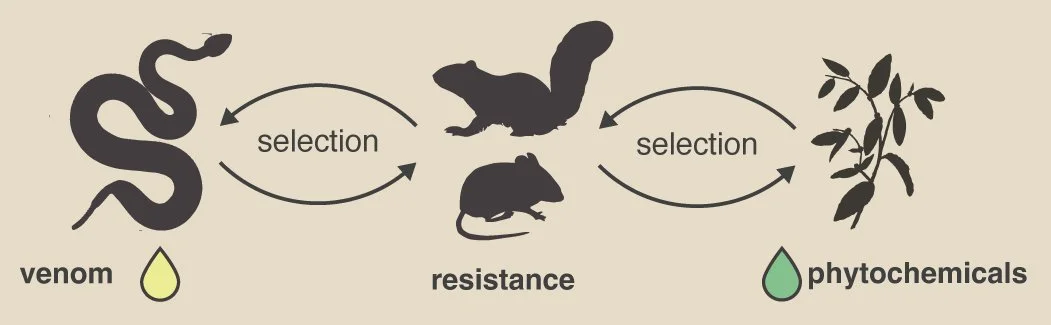
Exciting recent work I have done suggests that interactions between rodents, the poisonous plants they eat, and the venomous rattlesnakes that eat them do not occur in isolation. In fact, feeding on poisonous plants can lower a woodrat’s resistance to snake venom. Moving forward, I plan to investigate the molecular mechanisms and ecological consequences of this interaction.
I study toxin-resistant rodents, the poisonous plants they eat, and the venomous snakes that eat them
High-throughput functional proteomics identifies protein-protein interactions mitigating venom toxicity
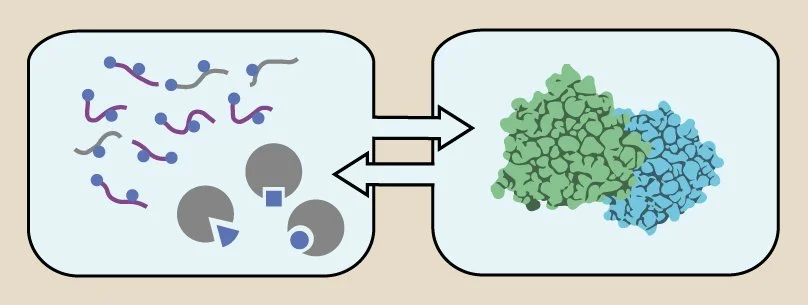
Define interactome Biochemical validation
What is the molecular basis of venom resistance? – Many wild mammals show a remarkable ability to survive snakebites. Rodents such as squirrels and woodrats show levels of venom resistance that are 100s to 1000s of times that of a house mouse. Surviving a snakebite is a remarkable physiological achievement for a small rodent because venom is so complex. Yet, we only know of a few proteins involved in venom resistance. To study the complex nature of coevolution between snake and rodent, we need to discover the full suite of proteins involved in defending against venom. My research program employs functional proteomic approaches such as bait-capture affinity profiling and degradomic profiling of proteases cut sites to discover new venom inhibitors and venom targets. When I discover a new protein with potential as a venom inhibitor I combine evolutionary comparative genomics and biochemical approaches to understand the role the protein might play during a snakebite.
For example, my student Meilyn Ward and I recently found that Serpina3 shows elevated levels of gene duplication in rodents, evidence that selection enriches for variants at functional sites in the gene paralogs, and that two of the paralogs we expressed from the woodrat Neotoma macrotis are generalist inhibitors of snake venom serine proteases. By profiling the full complexity of the protein-protein interactions that dictate survival or death during an encounter with a snake, I provide us the chance to understand how coevolution operates on complex animal systems.
How has the vertebrate blood clotting cascade evolved and how has attack by enemy species shaped variation in blood proteins? – The circulatory system is a rapid, pressurized system for transport of oxygen and nutrients, but the risk of blood loss led to the evolution of the clotting cascade. Circulation also presents a critical weak point for attack by parasites, pathogens, blood-feeders, and venoms, making the interplay between the basic biology of hemostasis and coevolution with enemy species a fascinating and under studied area.
I have been part of a team using deep mutational scanning (DMS) to study several serpins and their interaction with proteases. DMS is a powerful method to study sequence-to-function relationships in proteins, where high-throughput gene synthesis is combined with in vitro selection and next generation sequencing to rapidly profile the effects of all possible single amino acid substitutions in a protein. We have fine-mapped variant effects on serpin protease specificity, interactions with allosteric regulators, and stability, and related each of these features to evolutionary sequence conservation and selection across mammalian orthologs. Combining DMS and ancestral sequence reconstructions, I am currently testing the hypothesis that the serpin PAI-1 evolved its anti-fibrinolytic function as an early neofunctionalization event.
I have also used integrative analysis of basic blood clotting functions to study snake venom function and targets. Using genetically-modified zebrafish lines and laser-formed micro-injuries, we have shown that cottonmouth venom is adapted to target fish thrombocytes and prevents fish blood clotting better than venoms from snakes that do not include fish in their diets. Additionally, we used a microfluidic “blood-vessel-on-a-chip” to show that grey short-tailed opossums (Monodelphis domestica) possess von Willebrand factor that is highly resistant to the deleterious effects of the snake venom proteins botrocetin and aspercetin, which are major venom components of its natural enemy the fer-de-lance pitviper.
These high-resolution physiological assays are allowing us to isolate and study the individual protein-protein interactions driving variation blood clotting parameters and their response to animal venoms.
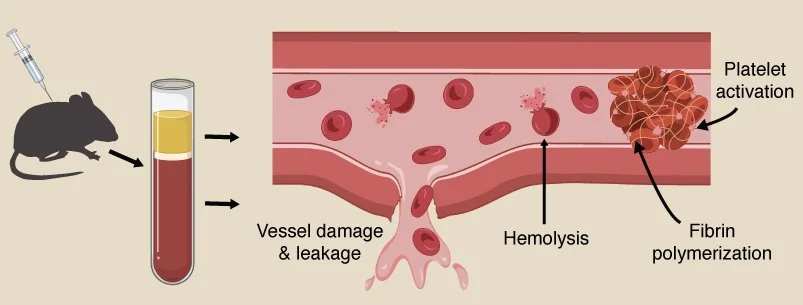
Venom hacks into multiple mechanisms of blood clotting and hemostasis